The 'Century of Dhamma' is not merely a temporal milestone but reflects the collective determination of everyone to adopt Dhamma principles as a guide for life. It is a century where humanity, unbounded by religious backgrounds, unites to forge a new era of peace, understanding, and mutual respect, with Dhamma as the foundation and achieving Dhamma Victory, or victory through righteousness, rather than through violence.
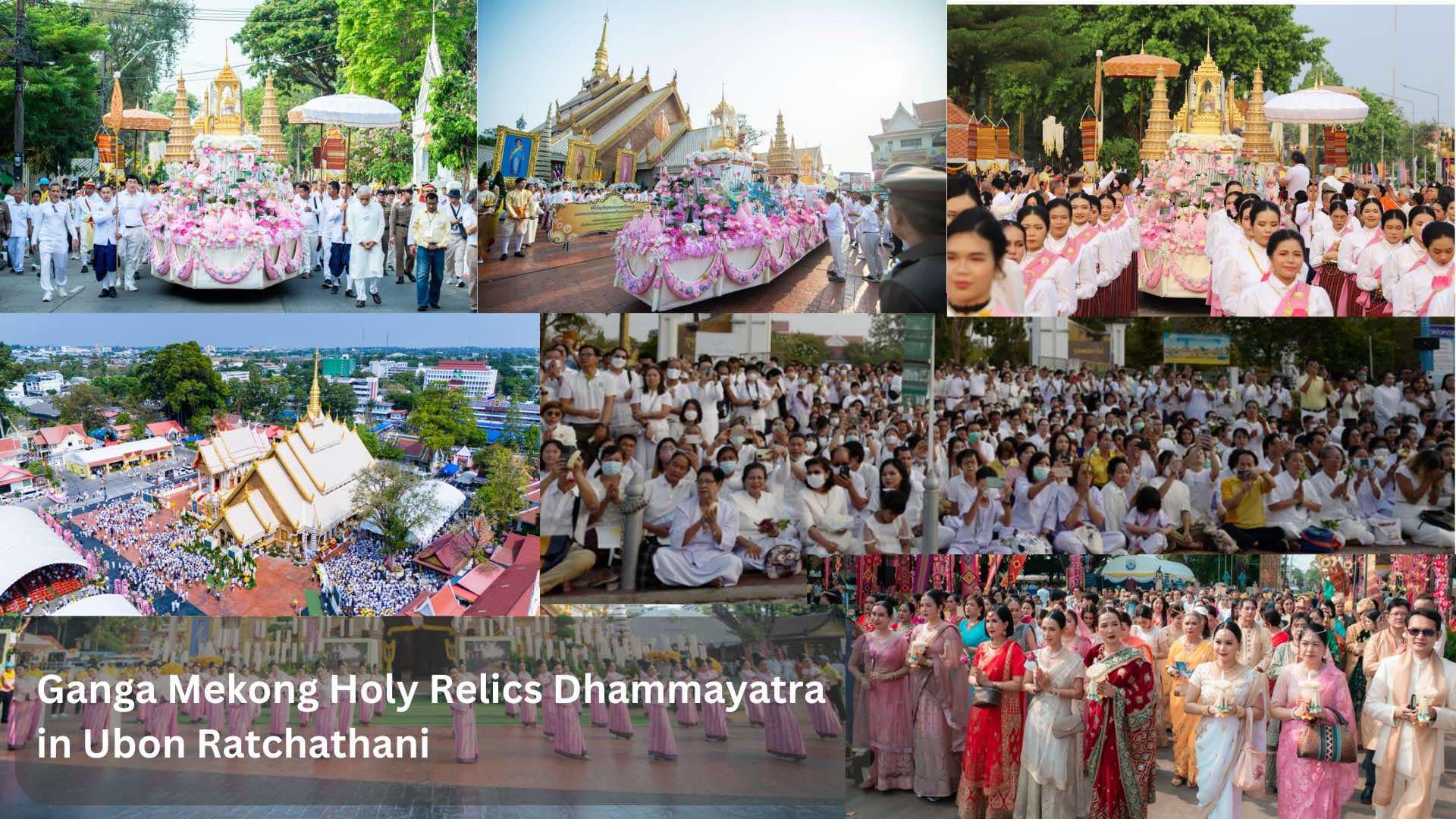
This philosophy aligns seamlessly with the identity and lifestyle of Ubon Ratchathani Province, evident from the massive faith-driven turnout for the enshrinement of the Buddha’s relics and the relics of Sariputra and Maha Moggallana in Ubon Ratchathani under the project 'From Gagnges to the Mekong.' This project attracted a total of 810,374 devotees from Ubon Ratchathani, neighboring provinces, and neighboring countries, including Laos and Cambodia, demonstrating overwhelming faith in Buddhism. Coupled with Ubon Ratchathani being a land of scholars, devout citizens, and the birthplace of revered monks like Luang Pu Sao Kantasilo, Luang Pu Mun Bhuridatta, and Luang Pu Cha Suphattho, it is rich with important temples and historical sites that are centers of spiritual gathering.
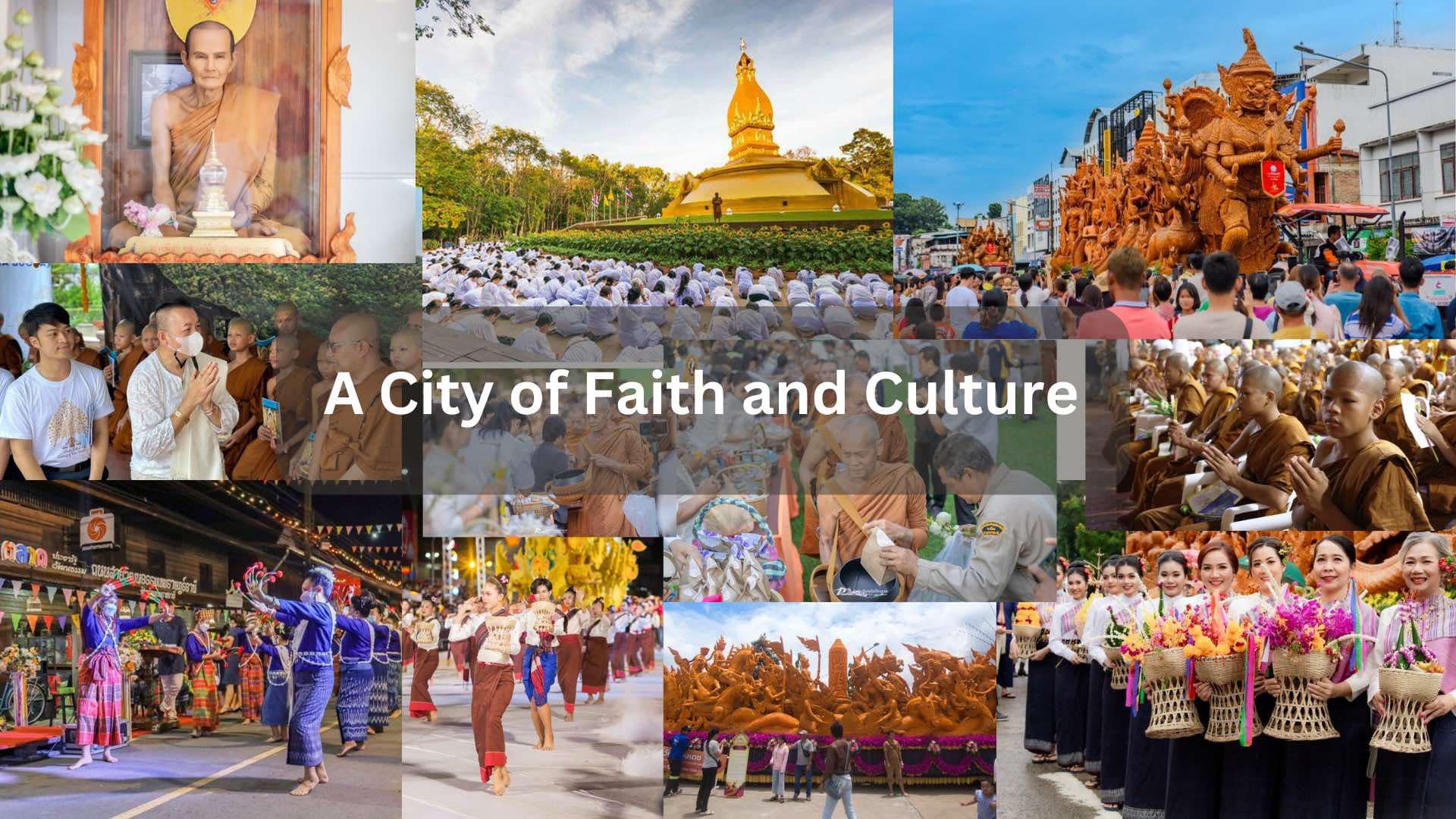
Its tradition of the Candle Festival, combining the beauty of Buddhist art and faith, further solidifies its appropriateness as a pivotal point for declaring a Century of Dhamma, as the World Meditation City, to awaken awareness towards a land of Buddhist Dhamma and foster international cooperation.
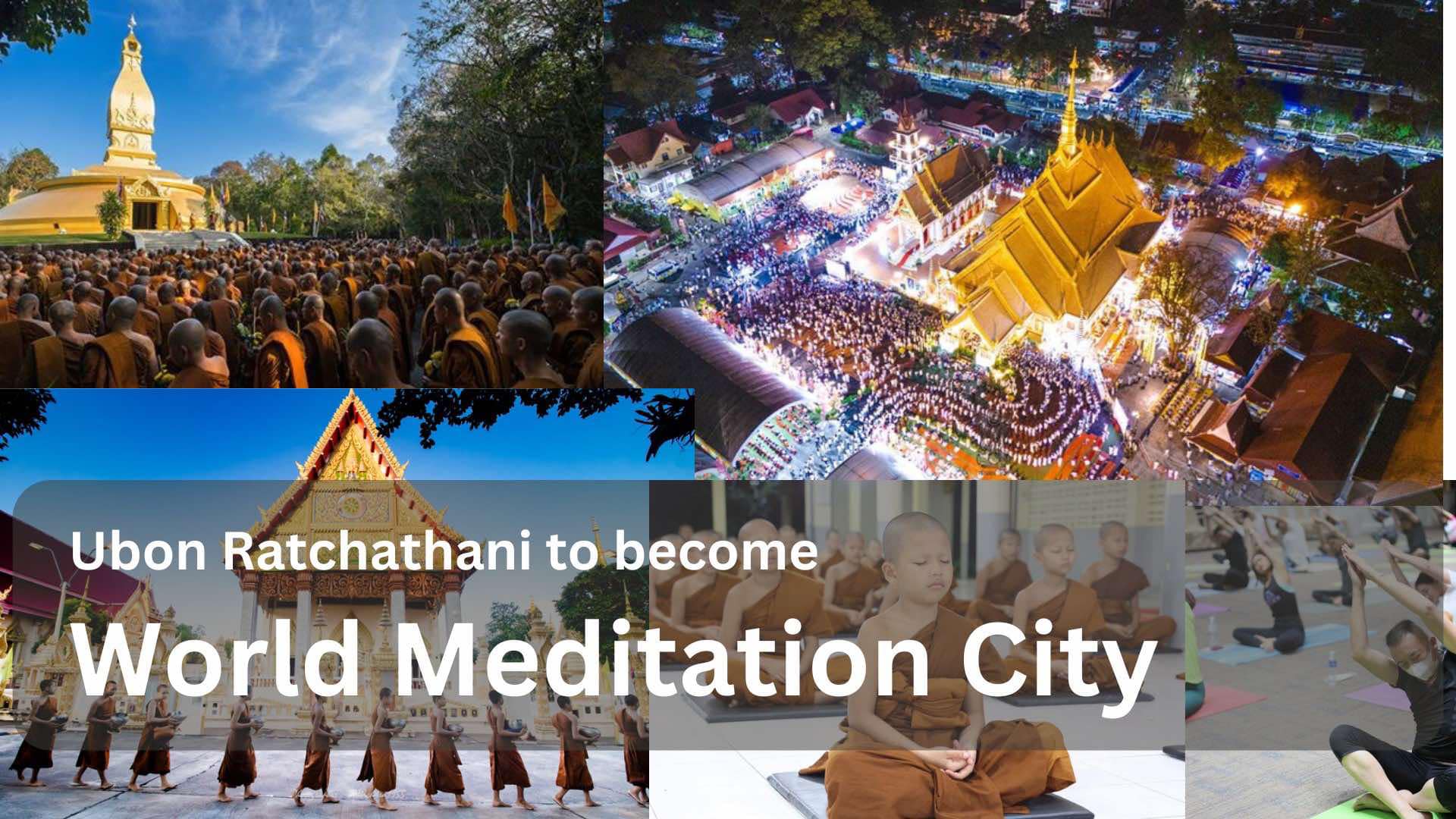
Ubon Ratchathani, or the World Meditation City, is a city that aims to be a beacon for travelers seeking Dhamma, peace, and inner beauty. It is a city where everyone prospers through mindfulness, awareness, and wisdom—a city of Dhamma tourism that uplifts spirits through beautiful art, culture, and architecture, enriched by nature. It is a city where leaders at all levels govern with righteousness and where citizens filled with goodwill are ready to create a peaceful society.
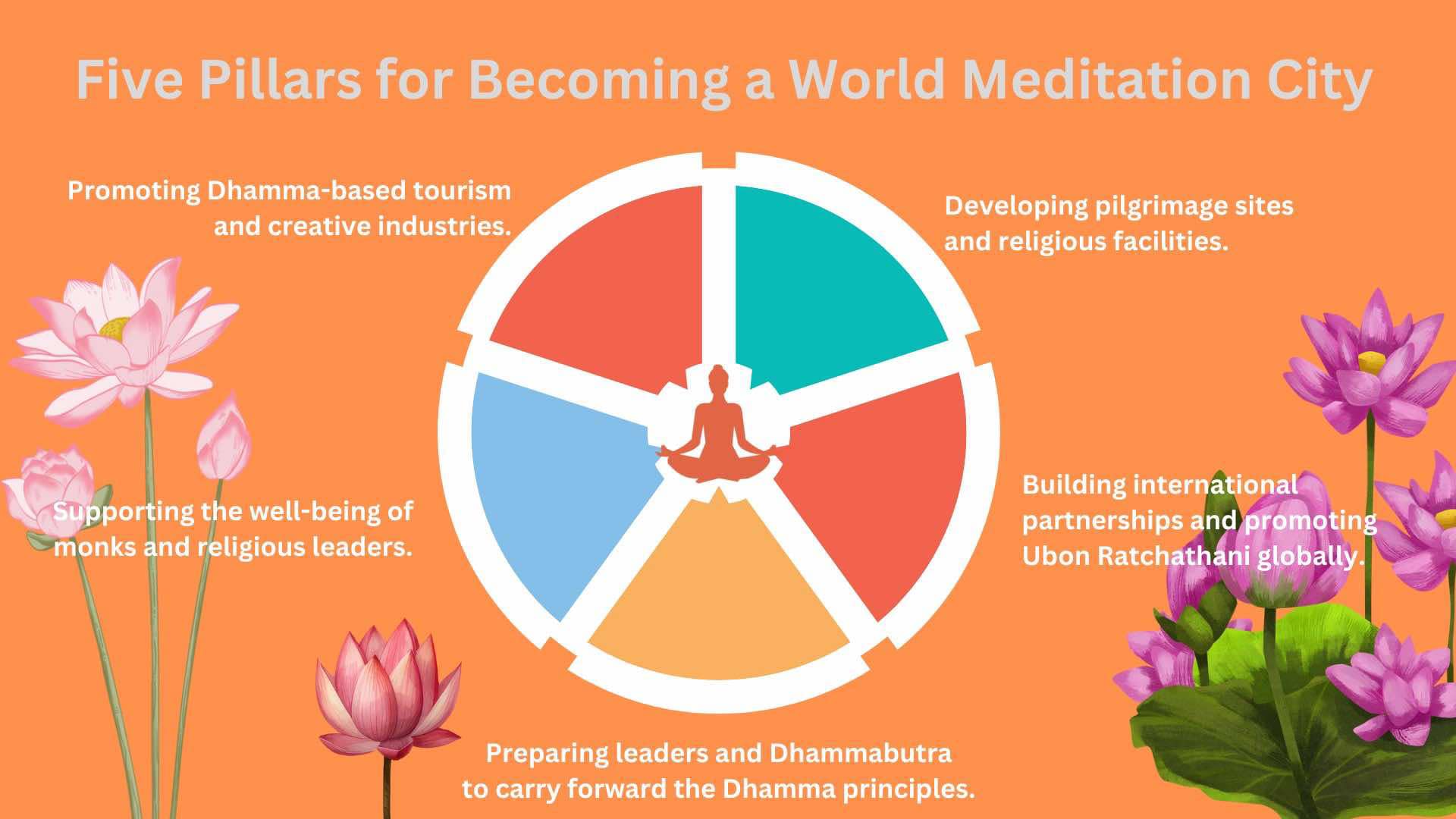
Ubon Ratchathani has designed a framework to drive integration across all sectors including tourism, culture, creative economy, education, international relations, natural resources, community protection, and human resource development to promote Vipassana meditation centers and spread Buddhist practices across the province, creating a Dharma ecosystem in every dimension through five main pillars:
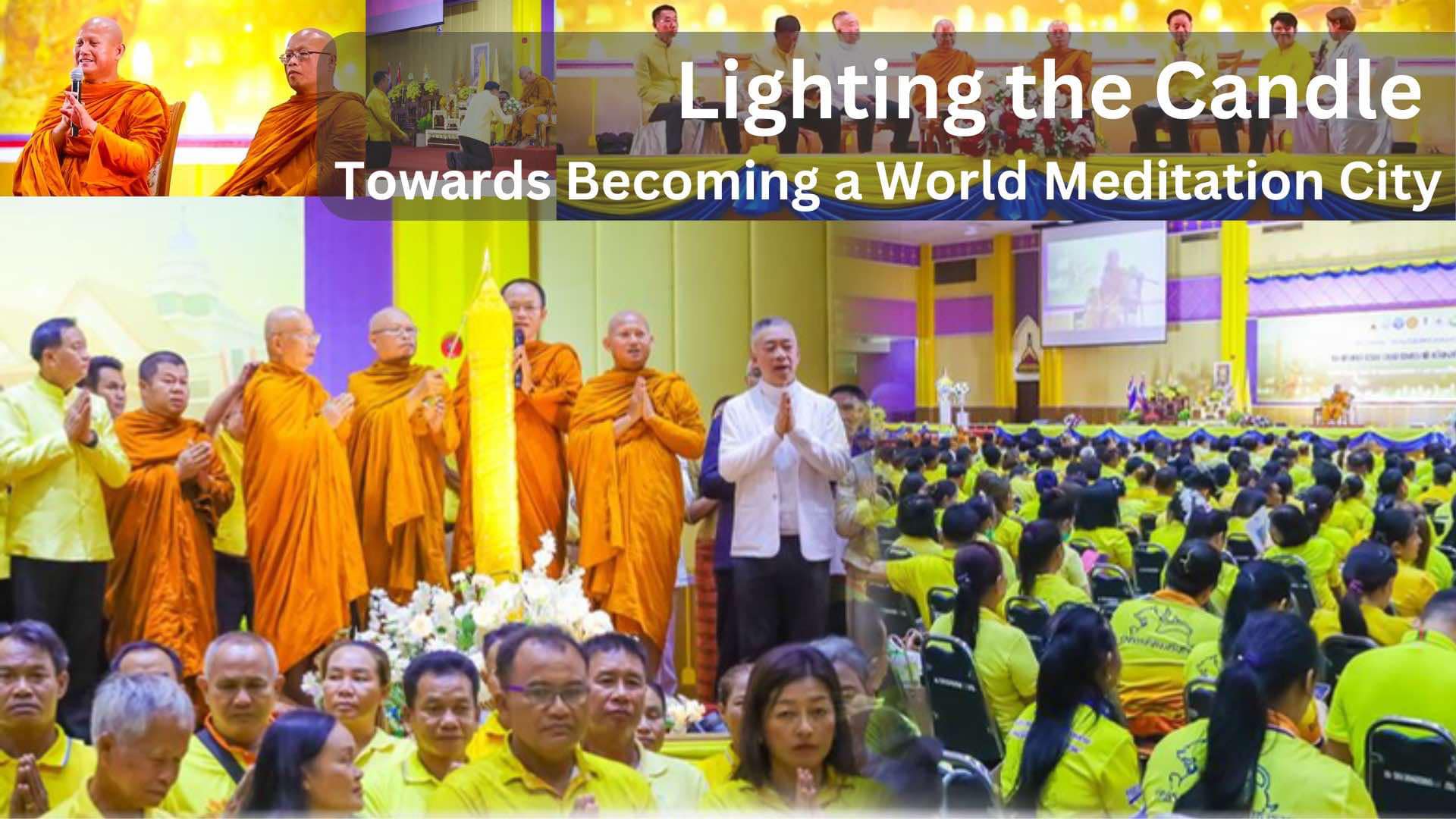
In June 2024, Ubon Ratchathani University and Ubon Ratchathani Province, in collaboration with the Bodhigayavijjalaya 980 Institute, the Embassy of India in Thailand, and a network of partners including Buddhist monks, community leaders, local leaders, educational leaders, the private sector, and the public sector, organized a seminar titled “Dhamma Victory towards the Century of Dhamma.” The event, held in Ubon Ratchathani, the city aspiring to become a world meditation city, was attended by over 2,000 participants. It aimed to declare cooperation and light candles of Dhamma to propose Ubon Ratchathani towards becoming a world meditation city.
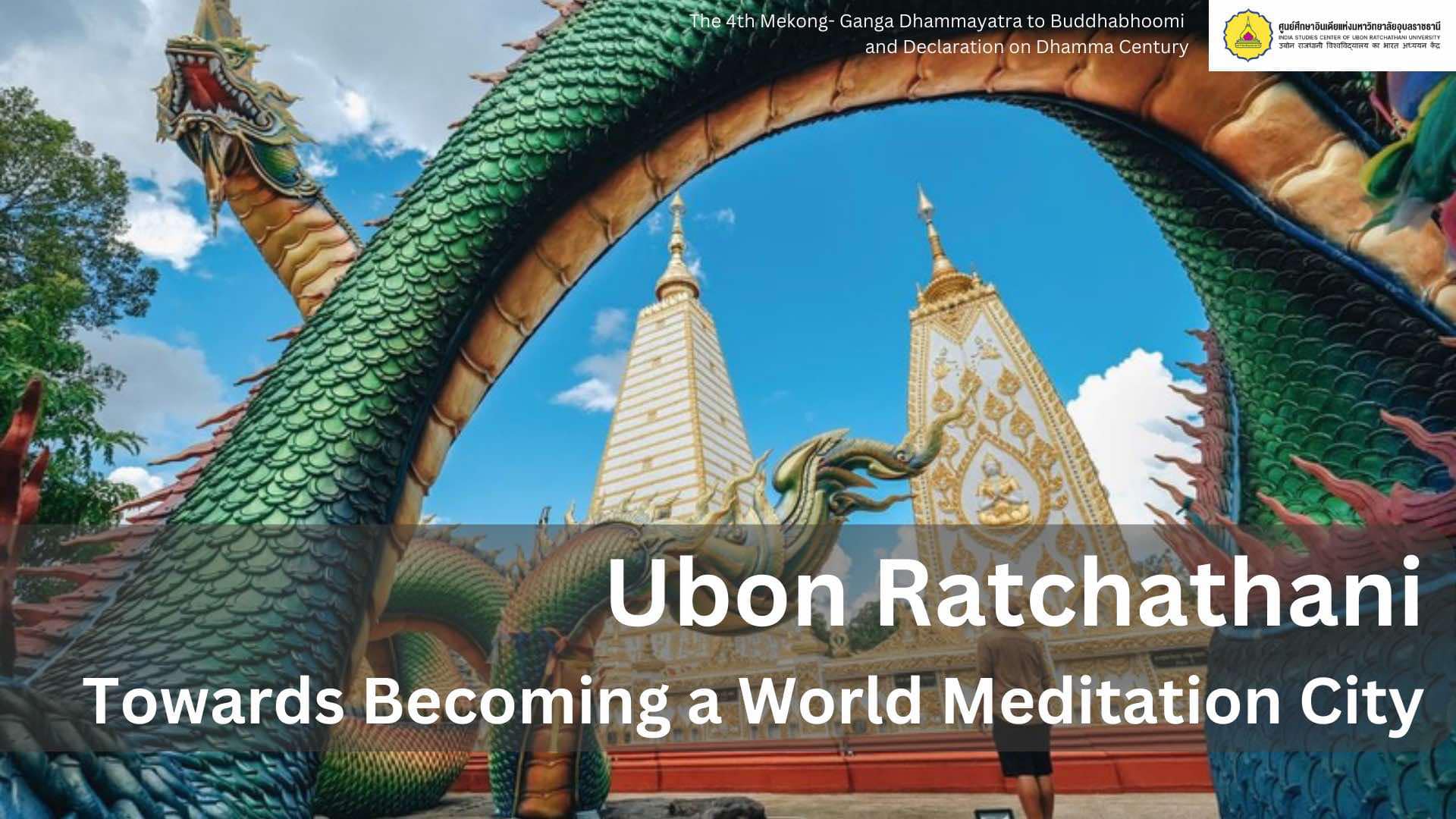
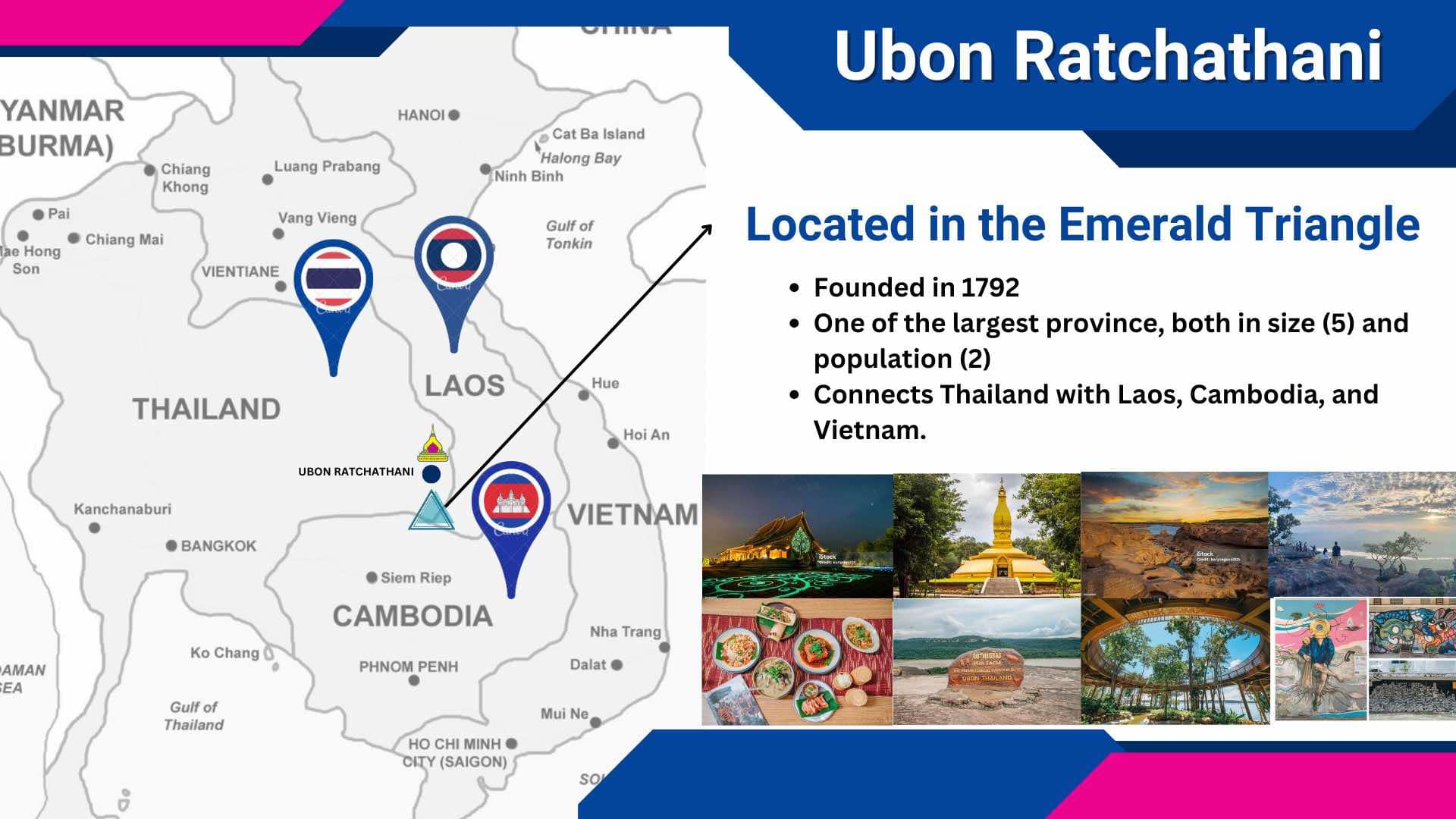
Founded in 1792, Ubon Ratchathani is the second most populous province and the fifth largest in area. It plays a vital role as a hub for economic, social, and cultural connections with the Mekong River countries, including Laos, Cambodia, and Vietnam. It also has a developing industrial estate to support regional economic growth and is a significant center for trade and investment. Additionally, it is famous for cultural landmarks such as Wat Phra That Nong Bua, Wat Nong Pa Pong, Wat Sirindhorn Wararam Phu Prao (Wat Phu Prao), Wat Thung Si Muang, Wat Pa Nanachat, and Wat Tham Khuha Sawan, and the Khemarat Walking Street, as well as natural attractions that bring peace to the mind, such as Pha Taem, Pha Chanadai, Sam Phan Bok, Huai Luang Waterfall, and more. Thus, Ubon Ratchathani rightfully earns its acclaim as the World Meditation City.